Designing for all
Universal design trends and shower innovation to support aging in place.
By Brian Zuccaro
In recent years, Universal Design (UD) and Aging-in-Place (AIP) principles have evolved from a niche concept serving the aging and disabled populations to a central philosophy driving the future of all home design. Once seen as a purely functional approach, they’re now embraced as lifestyle choices, blending accessibility, aesthetics, and wellness. This shift reflects deeper societal changes, demographic trends, and innovative strides in product development.
Macro trends shaping universal design and aging-in-place
Several societal shifts are propelling the widespread adoption of universal design. Most notably, the U.S. is experiencing a demographic sea change. According to the National Council on Aging, all baby boomers will be older than 65 by 2030, meaning 1 in 5 Americans will be at retirement age. This aging population is more likely to prefer "aging-in-place" — staying in their own homes rather than moving to assisted living facilities — a preference driven by the dual desires for independence and emotional connection to home.
In parallel, homeowners' increased equity in their properties enables them to fund modifications, such as first-floor laundry access and curbless showers, to enhance safety and convenience. Homeowners today aren’t just planning for old age — they’re optimizing for multigenerational living. Rising housing costs also influence this, encouraging multiple generations to share homes.
Crucially, there’s been a reframing in how we talk about these upgrades. Once stigmatized as sterile or institutional, UD and AIP solutions are now celebrated for their lifestyle and wellness benefits. Industry leaders and homeowners alike are embracing accessible design for safety, beauty, and value.
Changing consumer perceptions
The conversation around universal design has shifted dramatically in the past five years. It is no longer viewed solely as a functional necessity for seniors or individuals with disabilities, but increasingly as an inclusive, forward-thinking approach to design. Today’s homeowners want solutions that are subtle, elegant, and harmonize with modern design sensibilities.
Fixtures like grab bars are now reimagined with dual purposes and sleek finishes. Many are no longer referred to as "grab bars" at all, but as support rails with aesthetic intent. According to a 2023 report from the American Society of Interior Designers (ASID), 64% of design professionals said clients are requesting accessibility features that blend into the home’s decor — a 20% increase over the previous three years.
Looking forward, we expect universal design to be further integrated into mainstream residential construction. As bath spaces grow in size and function more like wellness retreats, including accessible features like wider doorways, single-level floors, and modular systems will become standard.
American Society of Interior Designers (ASID) reports that 64% of design professionals said clients are requesting accessibility features that blend into the home’s decor — a 20% increase over the previous three years.
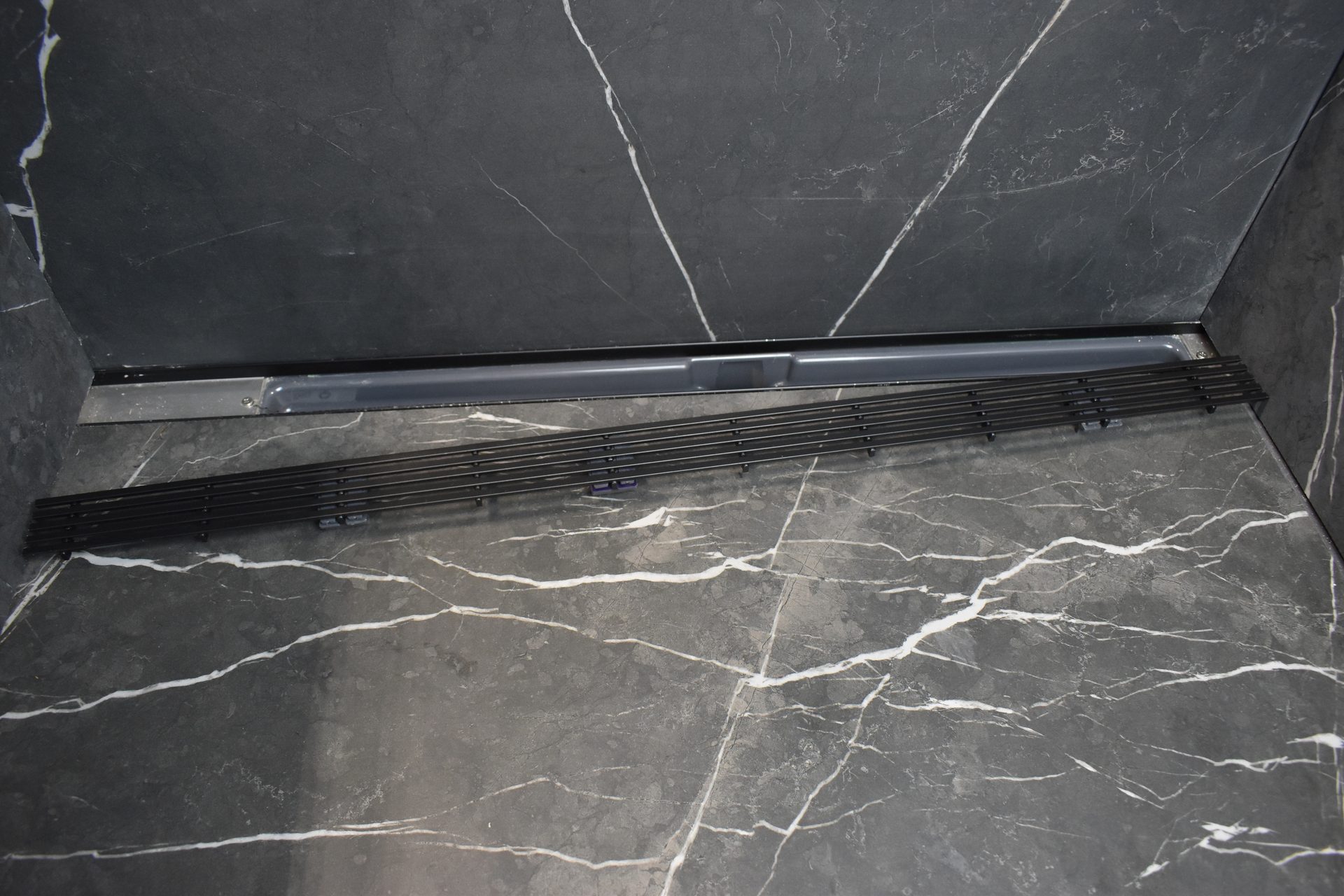
Oatey’s QuickDrain systems directly address these barriers by reducing the need for extensive structural modifications.
Overcoming design and installation challenges
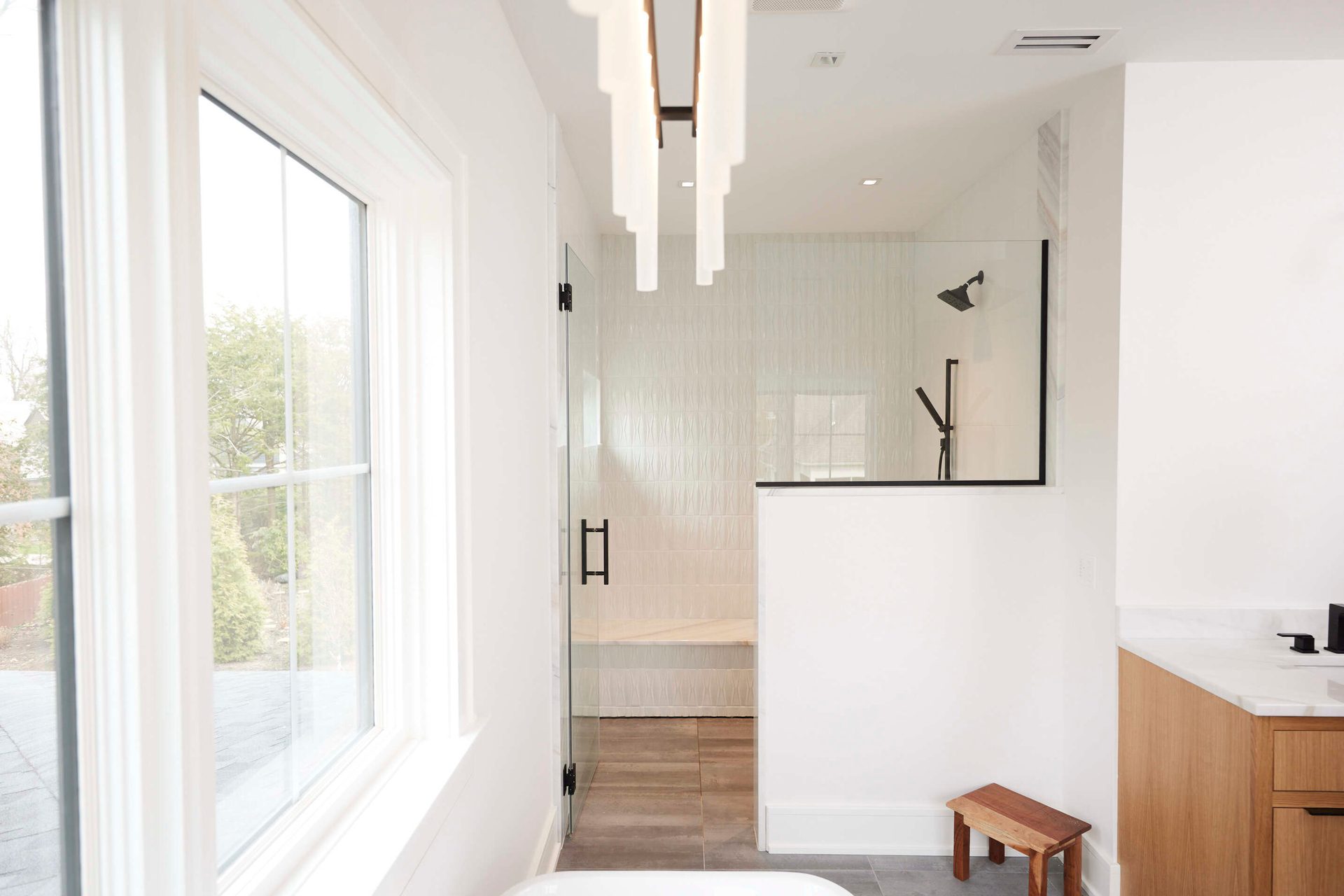
Today’s baseline for UD and AIP remodels starts with the bathroom. Barrier-free, or curbless, showers have become the gold standard. They eliminate physical thresholds and are often paired with linear drains for continuous floor design—an aesthetic and functional win.
However, professionals often struggle to retrofit this aging-in-place feature into older homes without compromising on style or busting budgets. Joist and subfloor limitations, hidden obstructions like HVAC or plumbing, and layout constraints make it challenging to add curbless showers and accessibility features. ADA-compatible linear shower drains and WallDrains provide flexibility that allows designers to achieve a seamless, curbless look without major rework of existing plumbing structures. This makes it easier than ever to build curbless, barrier-free showers.
With these drains, the plumber or tile setter can adapt to any existing plumbing conditions, making for an easier installation without any relocation fees for the homeowner. The system has onsite-customizable components that fit nearly any shower enclosure's size and condition.
A site-sizable linear drain body can be customized to adapt to existing drain locations, bypassing costly, time-wasting job-site challenges, which can help contractors complete an ADA bathroom remodel much quicker.
These drains can also enhance the space's visual appeal with customizable grates and covers to match the design theme.
Creating a visually appealing environment can significantly enhance the overall atmosphere of an ADA bathroom. Beautiful drain covers in various colors and finishes can be incorporated, seamlessly integrating with other bathroom fixtures and shower systems. Tile and back wall installations can be designed to hide drains, further enhancing the overall aesthetics.
The popularity of large-format and gauged porcelain tile panels (GPTP) — with fewer grout lines and enhanced slip resistance — complements curbless shower layouts beautifully and aligns well with linear drain installations. A linear drain allows for a single slope that opens up various tile options while minimizing grout lines. This eliminates the need for a four-way slope in the shower pan, enabling pros to seamlessly transition from the bathroom to the shower with large-format tiles and solid surfaces.
Listening to the field: Contractor and consumer feedback
Closer collaboration between manufacturers, designers, and contractors is key to ensuring universal design is both attainable and appealing. We can foster this by offering technical assistance early in the design process and providing modular, flexible systems that simplify specification and installation. Whether through co-development with designers or offering tailored guidance on selecting products aligned with accessibility principles, proactive engagement ensures better outcomes.
As universal design becomes not just a preference but an expectation, manufacturers are helping reshape how we think about aging, safety, and beauty in the built environment. By making smart investments in product innovation, professional education, and end-user empathy, we support a future where homes are truly designed for all.
Brian Zuccaro is Senior Product Manager, QuickDrain and Oatey Company. Brian has over 20 years of experience in leadership roles across new product development, channel, and product marketing for several nationally recognized building product brands as well as one of the nation’s 10 largest homebuilders.
Images courtesy of Oatey