The Real Cost of Disputes is Bigger Than You Think (But You Can Change That)
While disputes are rising and many are small in nature, Document Crunch CEO Josh Levy argues that “zero disputes” should be the goal.
By Josh Levy
5 steps to ensure successful project outcomes
Studies show 50% of construction projects finish late or over budget, make sure yours is not one of them with these five contract compliance steps.
BY DOCUMENT CRUNCH
Josh Levy argues that zero disputes should be the ideal for construction.
The construction industry is built on bold ideas. We imagine buildings that don’t yet exist, create extraordinary feats of engineering, and bring together a complex network of stakeholders to execute with precision, despite tight budgets, labor shortages and shifting timelines. Yet, for all our ambition, one outdated belief continues to hold us back: disputes are just part of the business.
It’s time to challenge that mindset. An industry plagued by claims, litigation and fractured relationships is not inevitable. We believe the future can—and should—be defined by zero disputes and stronger relationships. That vision isn’t just aspirational. It’s possible and necessary.
A Lesson from Safety Culture
Construction did not always have a strong safety culture. It took decades of intentional change bolstered by leadership, policy, and frontline commitment for safety to become a core industry value. Today, safety is embedded in every pre-task meeting, tracked obsessively and celebrated publicly. While we have not reached zero incidents, that bold goal has led to massive improvements in both outcomes and culture.
Imagine if we brought that same energy to decision-making, risk communication, and project alignment to this goal. What if we treated disputes the way we now treat injuries: red flags, not inevitabilities?
The Real Cost of Disputes
Once a construction dispute arises, the parties involved may find themselves wondering about the best course of action. Disputes can be time-consuming, harmful to a contractor's reputation or damaging to the relationship between them and the client.
Claims can cost both parties and end up disrupting the whole project. In my former life as a construction attorney, I saw firsthand how disputes waste time, erode trust and divert resources from building. These were operational failures that left everyone worse off.
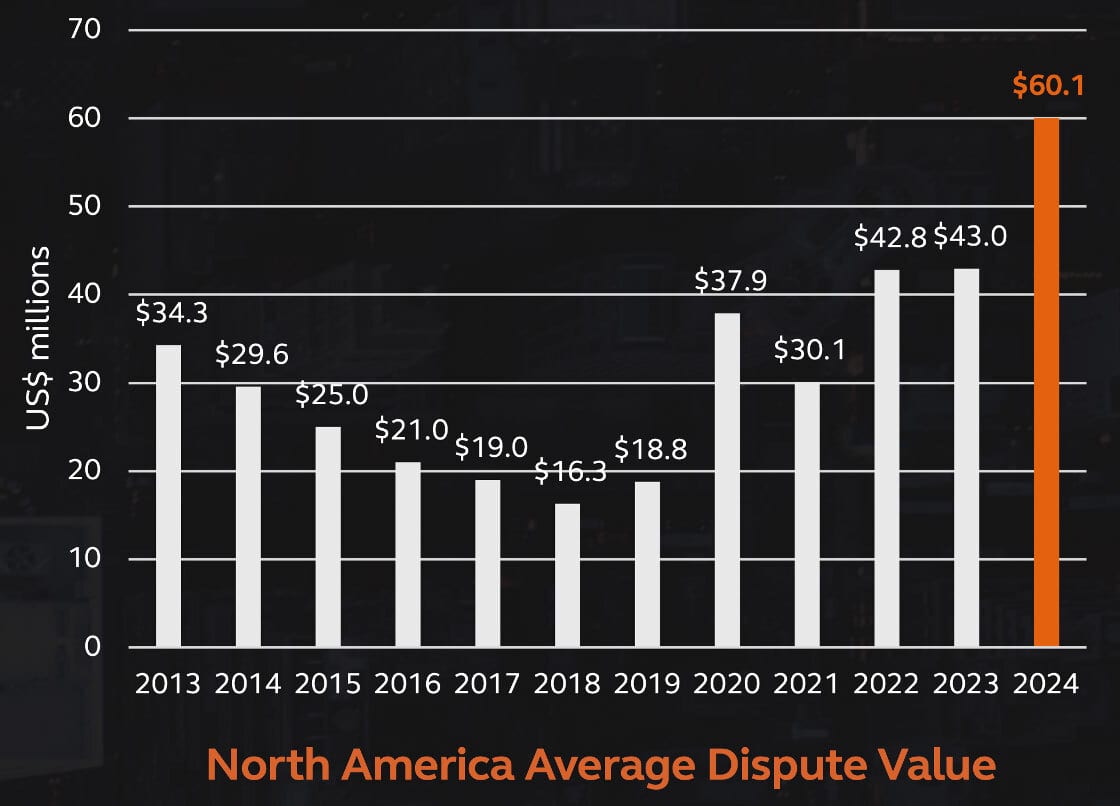
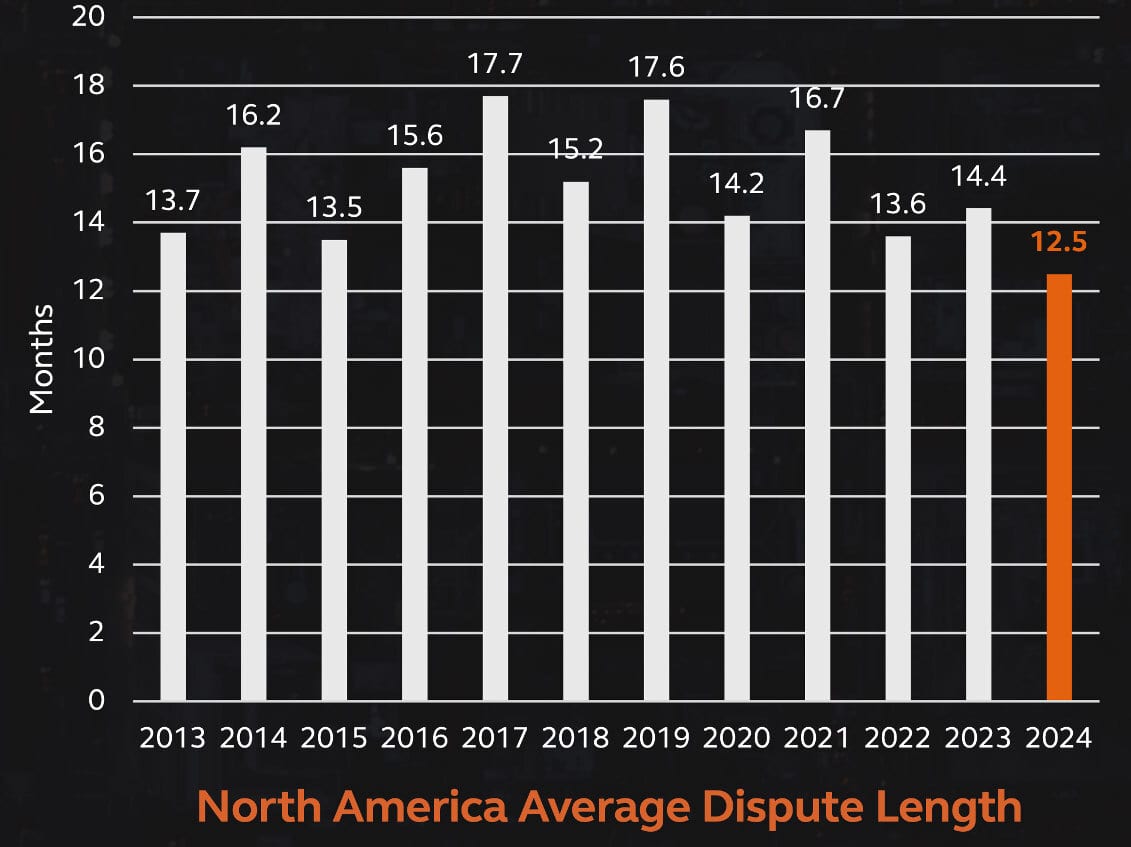
That lived experience is backed up by the 2025 Arcadis North America Annual Construction Disputes Report, which found that the new average value of a construction dispute in the U.S. is $60.1 million. Additionally, the average length of a dispute in North America is around 12.5 months, representing a significant amount of time that could seriously stall project progress and funding.
“…Project practice-based approaches whose calculations are drawn from the project records are expected to be more credible than alternative general approaches.”
– Derek Nelson, Partner
The average value of disputes increased significantly to
$60.1 million
The average length of disputes decreased marginally to
12.5 months
Arcadis 15th Annual North America Construction Disputes Report 2025
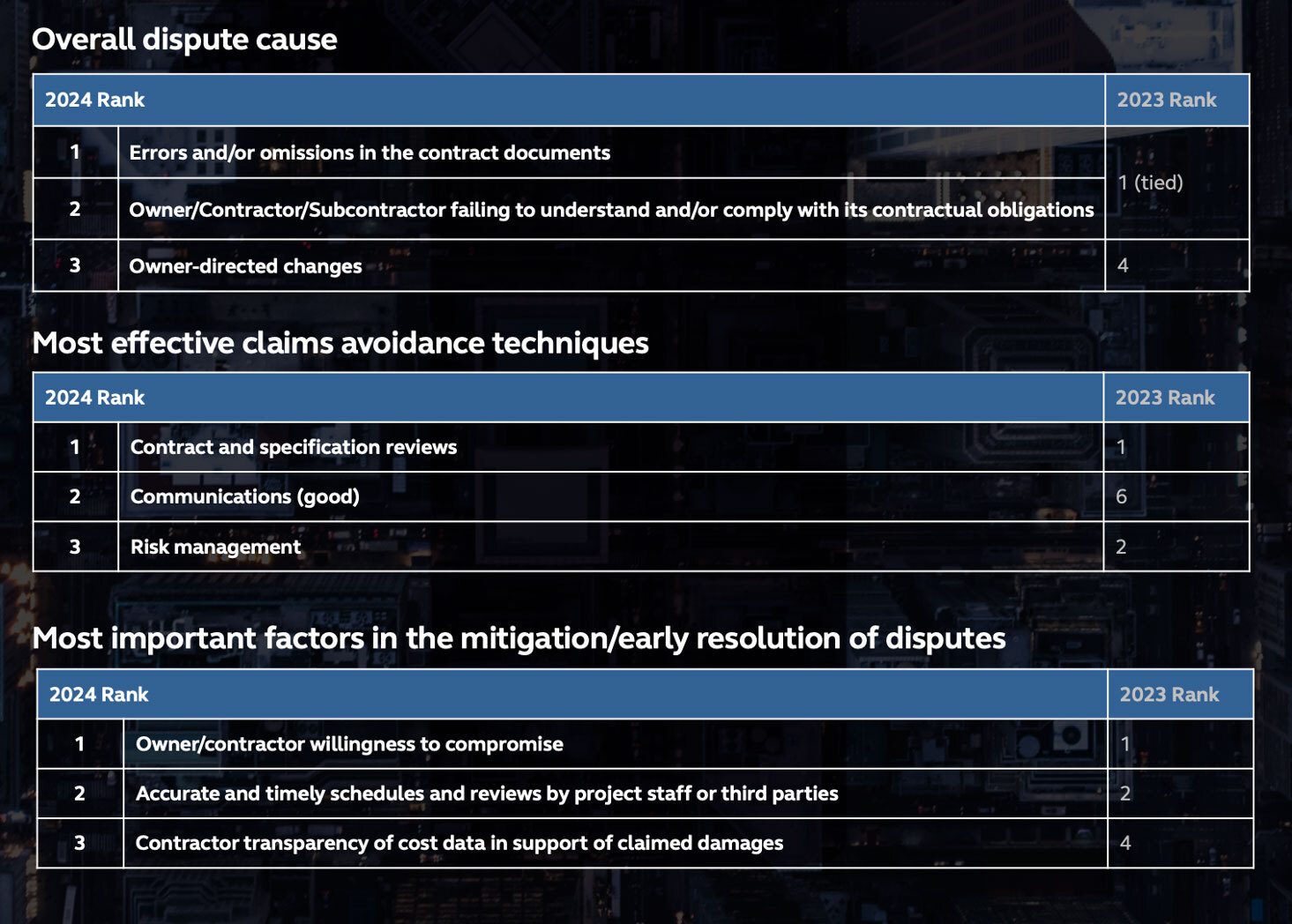
These figures alone should stop us in our tracks, but what’s more troubling is the root cause. Arcadis cites that one of the most common contributors to disputes is project stakeholders “failing to understand and/or comply with contractual obligations.” Not malice. Not fraud. Just a misunderstanding and a lack of clear decision-making frameworks when pressure is high. This is where the shift must begin.
Arcadis 15th Annual North America Construction Disputes Report 2025
Today, most dispute resolution procedures are an afterthought by contractors focusing on scope and price. However, it takes just one bad experience for one to handle dispute resolution more seriously.
Proactive Risk Management
When we first set out to tackle these issues, our focus at Document Crunch was simple: help people understand their contracts. However, we quickly realized awareness alone isn’t enough.
In construction, things will go sideways. Weather, inflation, pandemics, supply chain shocks—these variables are often beyond anyone’s control. The real difference lies in how teams respond. That’s where the breakdown often happens, not in the event itself, but in the cascade of decisions, assumptions, and communications that follow.
If the industry is going to move toward fewer disputes, we need to move beyond reactive problem-solving to proactive risk management. That means teams need real-time clarity, shared understanding, and a way to stay aligned across the entire project lifecycle, not just at the kickoff.
Our vision at Document Crunch is “zero disputes” because every dispute avoided means stronger relationships, time saved, and costs kept in check. Just like in safety, aiming for zero sets the standard. It drives us to put the right tools, knowledge, and behaviors in place from day one. While disputes may still occur, we treat each one as preventable and commit to building a culture where zero is simply how we do business.
The construction industry has proven its ability to evolve. It embraced digital workflows, modularization, and safety protocols that once seemed radical. Now, it’s time to take the next step: embedding alignment as a core value and treating clarity as a leading indicator of success.
Just like the idea of wearing metal hard hats was unthinkable at the start of the 20th century, the notion of “zero disputes” might feel far off today. Yet, hard hats eventually became standard. Safety protocols evolved and what once felt radical became second nature.
The path forward starts with a collective belief that better outcomes are possible when we plan for alignment, communicate clearly, and hold ourselves accountable not just for what gets built but also for how we build it together.
Josh Levy is Co-Founder and CEO of Document Crunch, the AI Risk Reduction Platform Built for Construction, and a 2024 ENR Top 25 Newsmaker.